Software, built the way infrastructure is drawn.
Weekday Offender Limited is an independent engineering studio. We design, ship and maintain custom software, web and mobile applications, cloud platforms and integrations — with the discipline of a drafting room.
- Practice
- Custom engineering
- Model
- Studio, not agency
- Entity
- UK Limited co.
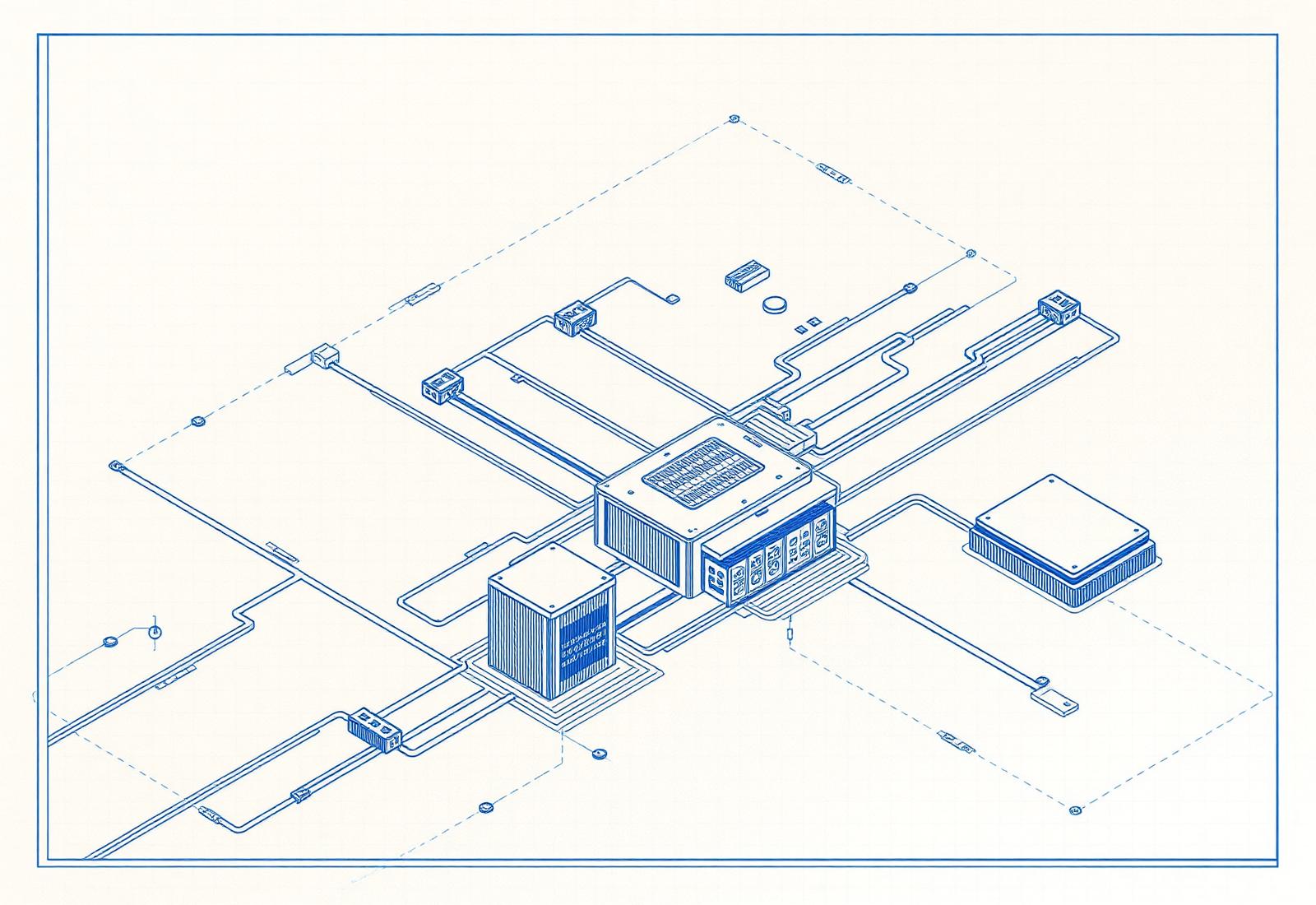
A small studio for durable systems, not disposable prototypes.
Weekday Offender Limited is an independent software engineering practice registered in the United Kingdom. We work with founders, product teams and operators who need software that behaves the way it is drawn — predictable in production, honest about its limits, and maintainable long after the launch.
We are deliberately small. Every engagement is led by the people who write the code, not by a layer of intermediaries. That means shorter feedback loops, fewer handoffs, and technical decisions that are grounded in the reality of shipping and operating the system.
What we build, ship and operate.
- Backend services
Typed APIs, event-driven pipelines and background workers designed for observability from day one.
- Web applications
Server-rendered and single-page interfaces with disciplined state, accessible components and predictable performance.
- Mobile clients
Cross-platform and native mobile applications built around the same domain models as the backend.
- Cloud platforms
Reproducible infrastructure, hardened deployment pipelines and cost-aware architecture on major public clouds.
- Integrations
Reliable adapters between internal systems, third-party APIs and legacy databases — with retries, backoff and audit trails.
- Modernisation
Incremental rewrites of ageing systems that keep the business running while the internals are replaced.
A short catalogue of the disciplines we practise.
Sectors where our engineering translates well.
Ledgers, reconciliation and settlement workflows where correctness is not negotiable.
Data-sensitive applications with clear consent, audit and retention requirements.
Systems that coordinate people, vehicles and physical events in real time.
Internal platforms that replace spreadsheets and shared inboxes.
Storefronts, back-office tools and integrations between channels.
Editorial workflows, distribution and audience-facing experiences.
Learning platforms, assessment tooling and data collection instruments.
Device gateways, telemetry ingestion and operator dashboards.

A working knowledge of the modern stack — chosen, not collected.
We keep our toolkit deliberately narrow so we can be honest about depth. Languages, runtimes and platforms are chosen for the problem in front of us, not to satisfy a résumé.
Six movements from a first conversation to a running system.
- STEP 01Discovery
Written brief covering objectives, constraints, users and success criteria. No slide decks.
- STEP 02Architecture
A minimal set of technical decisions, documented as diagrams and short rationale notes.
- STEP 03Increment 01
The smallest useful working slice, deployed to a real environment within weeks.
- STEP 04Iteration
Weekly changes reviewed against the brief. Scope adjusted openly rather than silently.
- STEP 05Hardening
Load, failure and access reviews before the system carries meaningful traffic.
- STEP 06Operation
Handover with runbooks, or ongoing operation by us under a defined service window.
What clients tend to notice within the first quarter.
Scope, cost and calendar are negotiated openly. Surprises are surfaced early, not at the end.
Systems designed to be operated cheaply — not just built quickly — reduce the total cost of ownership.
Documentation and tests are treated as deliverables, so the system survives changes in staff on either side.
One small team is responsible from architecture to operation. Escalation paths are short.
The codebases we hand over are readable enough that new engineers can be productive within days, not months.
We favour standards and portable choices, so the system is not held hostage by a single vendor.
Security is part of the engineering process, not an audit at the end.
We treat security, privacy and quality as first-class properties of the systems we build. Access to production is scoped and logged; secrets live in dedicated managers, never in source control; environments are reproducible so that a broken build can be rebuilt from source in minutes.
Testing is layered: static analysis and type checks in editor, unit and integration tests in continuous integration, and targeted end-to-end checks against the interfaces that matter most. Human review is required for every change that reaches production.
- — PrincipleLeast privilege
Access scoped to the individuals doing the work.
- — PrincipleAuditable change
Every production change traceable to a person and a review.
- — PrincipleData minimisation
We store only what the system genuinely needs.
- — PrincipleRecoverability
Backups, restores and disaster procedures are exercised, not assumed.
A short constitution we hold ourselves to on every engagement.
A few questions we hear at the start of most engagements.
- How do engagements typically begin?
- We start with a written discovery brief covering objectives, constraints and success criteria. From there we scope a first delivery increment — usually two to four weeks — that produces a working artefact rather than a slide deck.
- Do you work with existing codebases or only greenfield?
- Both. A significant portion of our work is modernising, extending or stabilising systems that are already in production. We're comfortable inheriting legacy architectures and gradually improving them without stopping the business.
- How is intellectual property handled?
- Client code, data, designs and documentation belong to the client. Ownership transfers as work is delivered, and our contracts include explicit assignment clauses. We retain no proprietary lock-in on the artefacts we produce.
- Which time zones and languages do you operate in?
- We operate primarily in English and coordinate with clients across European and North American business hours. All written documentation, code comments and specifications are produced in English.
- How is confidentiality maintained?
- Every engagement is covered by a mutual non-disclosure agreement. Access to client systems is scoped to the individuals working on the project, credentials are stored in vaulted secrets managers, and unnecessary data is not copied to local machines.
The shortest path to a conversation.
Written enquiries reach the person who would work on your project. Please include a short description of the problem, any constraints you already know about, and a rough timeframe.
Software that is drawn, built, and then maintained — by the same hands.
Weekday Offender Limited exists because the interesting problems in software are not solved by scale, but by attention. We would rather build one system well than ten systems adequately. If that describes what you need, we would like to hear from you.